Why Spanish books are your secret weapon
You can say hola and buenas noches to your baby every day. You can play Spanish music in the kitchen, narrate the nappy change in your best accent, and still feel like nothing is actually sticking. That’s exactly why the best bilingual Spanish books for babies are worth more than any playlist or flashcard set.
Then something shifts. You read the same book for the fourteenth time that week and your toddler points at the dog on the page and says perro — completely unprompted — and you stand there, a little bit stunned, wondering if that was luck or if something is finally working.
It wasn’t luck. That’s how bilingual language grows: through repetition, rhythm, and the same words showing up again and again in warm, familiar moments. And books are your secret weapon. Not because they’re educational (nobody has time for that energy at 7pm) but because storytime is one of the few moments your child is actually still. Listening. That’s your window. Use it in Spanish.
These are the Spanish books we keep reaching for. Available in the UK, tested by a small and very opinionated human.
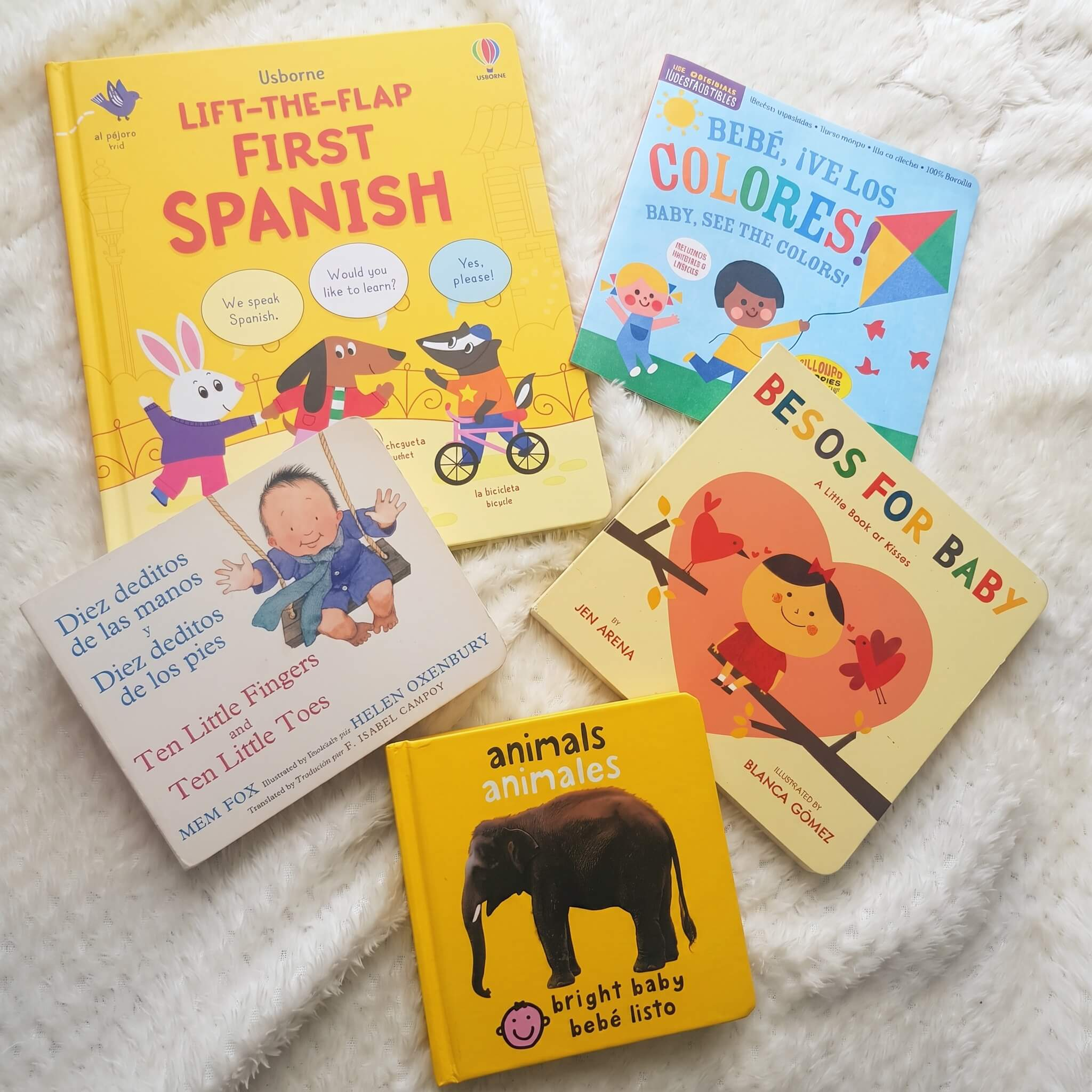
| Books | Best for | Age | Buy |
|---|---|---|---|
| Besos for Baby | Bedtime routine & first feelings | 0–12 m | Amazon |
| Ten Little Fingers / Tengo Diez Deditos | From birth, any family | 0–2 yrs | Amazon |
| Bebé ¡ve los colores! | First colours, daytime routine | 0–2 yrs | Amazon |
| Animals / Animales Bilingual | First animal words | 0–2 yrs | Amazon |
| Lift the Flap First Spanish | Toddler bilingual discovery | 2–4 yrs | Amazon |
I earn a commission if you purchase through these links, at no extra cost to you.
Best bilingual rhyme book in Spanish
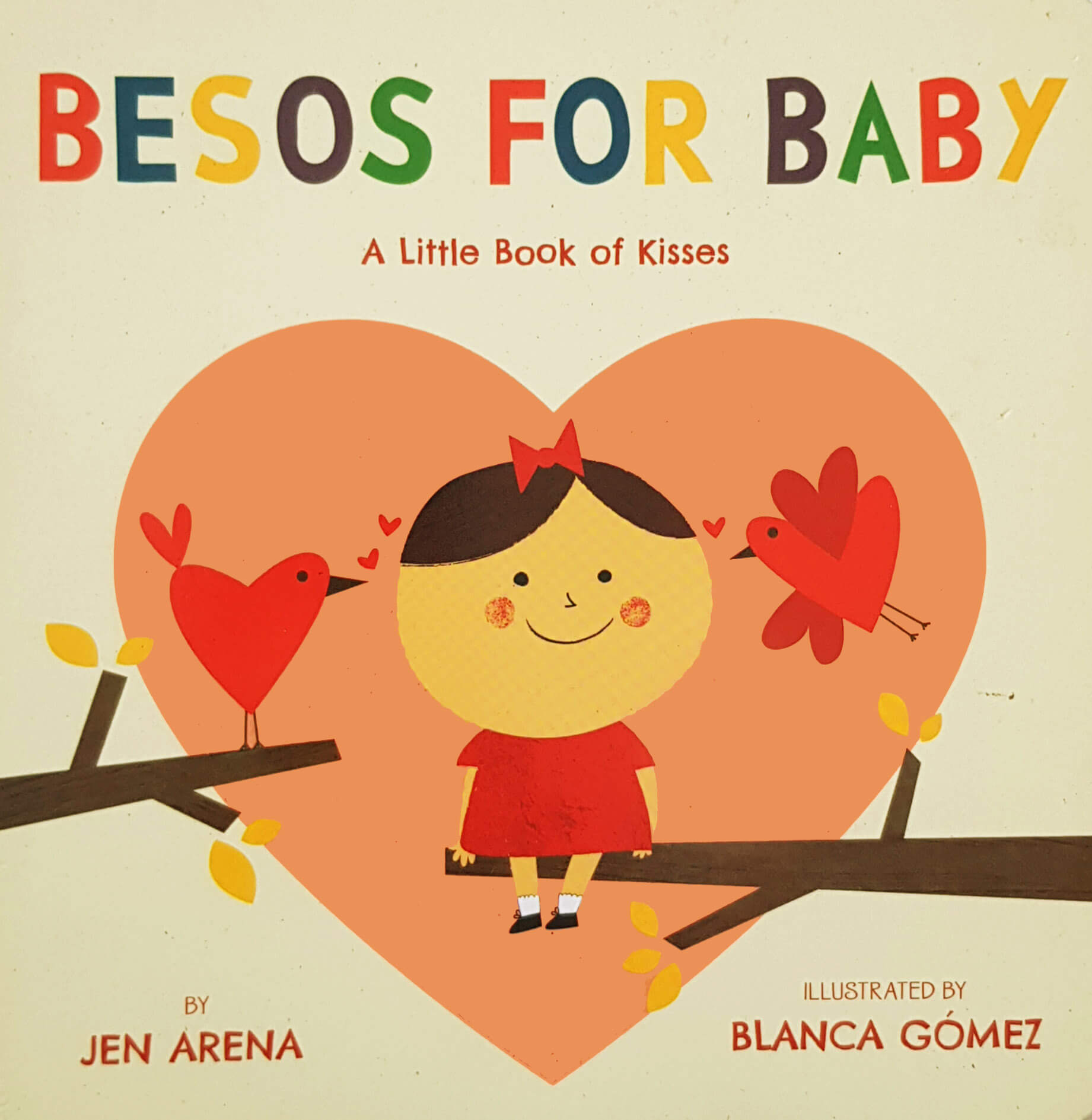
1. Besos for Baby: A Little Book of Kisses

Besos for Baby moves through ten warm characters, each taking their turn giving kisses to baby, weaving English and Spanish together in a gentle rhyming rhythm. The Spanish isn’t translated separately on a different line. It’s woven right in — Besos, Papi, besos — which means your child hears both languages as part of the same warm moment rather than a language exercise happening to them.
The genius of it is that emotionally charged words stick. Your child may not remember perro from a flashcard. But they will remember it from giggling through a pretend dog kiss on the sofa at 7pm.
Perfect for: families with children under two, especially if you’re introducing Spanish gently and want it to feel natural rather than instructional. Works beautifully in mixed-language households and for heritage parents who worry they’re not doing enough. Besos for Baby proves that small, repeated moments of connection are more than enough.
One note: it’s beautifully simple, which means older toddlers will outgrow it. Best used as part of a small rotation, not the only book on the shelf.
Best Spanish board books for babies
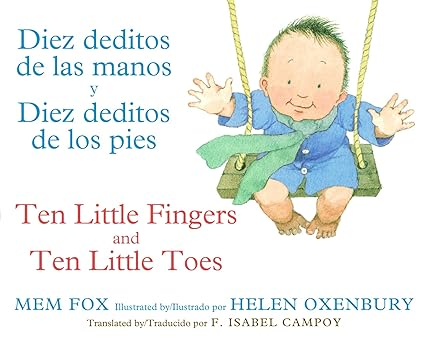
2. Ten Little Fingers / Diez Deditos — by Mem Fox & Helen Oxenbury

The story follows babies from all over the world, each born differently, all sharing the same fingers and toes, until one little one receives three kisses on the nose from her loving mum. The watercolour illustrations are luminous — roly-poly little ones with all their wrinkles, dimples, and completely squishable arms, true to life in a way that makes parents go soft every time.
The text is rhythmic, rhyming, and impossibly simple — which makes it absolutely effortless to read aloud bilingually. Read the whole book in Spanish one night, English the next. Or mix as you go. Both work. The consistency matters more than the method.
The bilingual magic is that the repetitive refrain comes around again and again, so your baby absorbs both languages without flashcards or pressure, while you count fingers and wiggle toes and they start anticipating the whole routine. That anticipation is language learning. It doesn’t look like it, but it is.
Perfect for: from birth through toddler years — serious longevity for a baby book. Especially good for parents whose Spanish is running on fumes, because the rhythm does the heavy lifting for you.
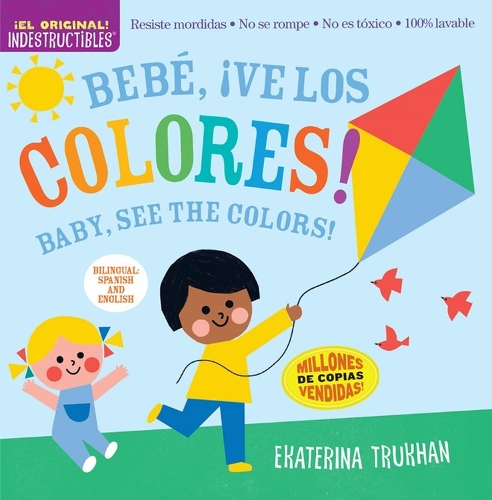
3. Bebé ¡ve los colores! / Baby, See the Colors! — by Ekaterina Trukhan

A colour book that survives being chewed, soaked, sat on, and enthusiastically waved around at breakfast. Bebé ¡ve los colores! is part of the Indestructibles series, which means it’s made from rip-proof, chew-proof, washable material that looks deceptively thin but is built to outlast almost anything a baby can do to it.
Each page introduces a colour through bold, clear illustrations paired with the word in both Spanish and English. Rojo. Red. Azul. Blue. That’s it. Clean layout, no distractions, and the bilingual text is right there on the page so you don’t need to do anything except point and name.
Tip: leave it at the nappy-change table. Name the colour in Spanish while they kick around, repeat in English, no lesson required. Or connect the colours to real life — look, your cup is blue, azul, what else is azul? Suddenly book vocabulary becomes real-life vocabulary, and that’s where it sticks.
Perfect for: parents who want something they genuinely cannot accidentally destroy at 3am. A solid, no-stress place to start if you’re building a bilingual baby library from scratch.
Best Spanish vocabulary books for toddlers
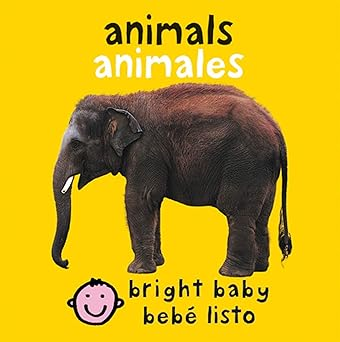
4. Animals / Animales Bilingual — by Roger Priddy

One animal per page. Labelled clearly in English and Spanish. Real photographs, not illustrations, which matters more than it sounds — children connect word to image fastest when the image looks like the actual thing, not a cartoon version of it.
26 pages = 26 animals = 52 new words. That’s the whole pitch, and it works.
The layout is completely clean: one photograph, two names. No narrative to follow, no sentences to parse. For babies and young toddlers, especially bilingual ones processing two language systems at once, simpler formats stick faster. Complexity can come later. This is your foundation.
The point-pause-repeat approach works brilliantly here: point to the animal, say it in English, pause for a second to give their brain space, then say it in Spanish. Dog… perro. Horse… caballo. That tiny pause prevents language overload and gives them time to attach both labels to the same image. And then use the words outside the book (on a walk, at a farm, on pyjamas), because repetition across contexts is what locks vocabulary in.
Perfect for: ages 0–2, the very beginning of your bilingual journey, parents introducing any language in a low-pressure way. The simplicity is the strength.
Best lift-the-flap Spanish book for toddlers
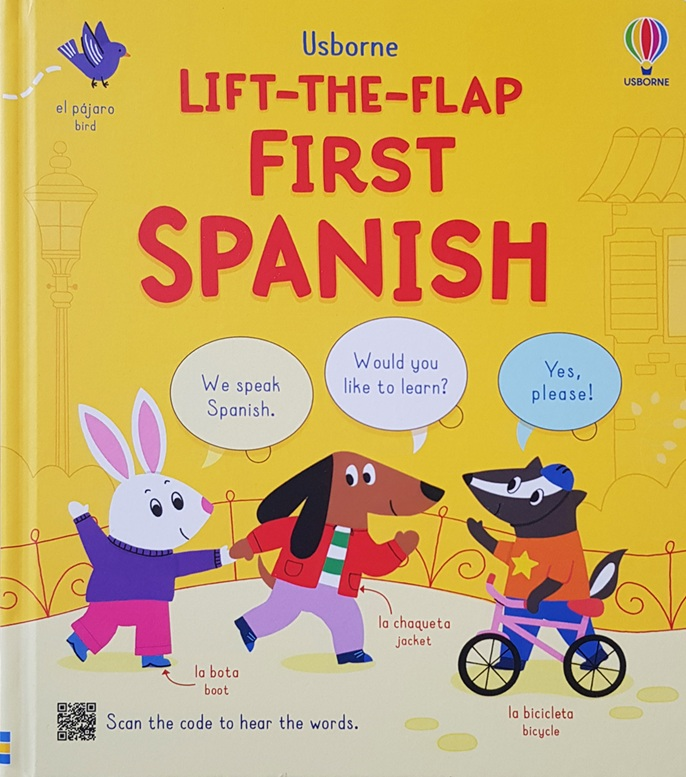
5. Lift the Flap First Spanish— by Usborne

Each page covers a familiar slice of toddler life — food, home, emotions, daily routines — with flaps that reveal the Spanish phrase and its English translation underneath. Lift one and you get the little reveal: ¿Tienes hambre?… Are you hungry? Then they lift it again. And again. At least twelve more times. Learning is happening even when it doesn’t look like it.
The key difference between this and a vocabulary book is that this one teaches your child how to speak, not just label. They’re not learning “apple” — they’re learning how to ask for one. The phrases mirror real everyday interactions, which means you can use them straight off the page at snack time, during bath, getting dressed, on the way to nursery. That’s where language sticks — when it leaves the book and lands in real life.
Usborne also provides free audio on their website so you can hear the phrases spoken by a native speaker. Quietly brilliant for parents whose Spanish is functional but whose confidence needs a nudge. No guesswork, no accidentally inventing your own dialect.
Perfect for: toddlers aged 2–4, families where one parent speaks Spanish and one doesn’t, families where Spanish isn’t the native language at all. Also counts as fine motor skills practice, which is convenient.
How to use these books if your Spanish is… let’s say, a work in progress
You don’t need to be fluent. The rhyme books carry the rhythm for you. The vocabulary books put the word right there on the page. The lift-the-flap has audio support. What matters is consistency and warmth — your child needs to hear Spanish regularly and associate it with something good: you, cuddles, storytime, not a lesson. These books make that easy, even on the days when your Spanish vocabulary peaks at hola and gracias and you’re mostly running on autopilot.
Small, repeated moments of connection are enough. The books do the heavy lifting.
FAQ
Where can I buy children’s books in Spanish in the UK?
All the books in this list are available on Amazon UK with standard Prime delivery. A few are also stocked on World of Books if you prefer second-hand.
What age should I start reading Spanish books to my baby?
From birth. Babies begin absorbing language sounds in the very first weeks of life — the earlier you introduce Spanish, the more natural it feels to them. Board books with clear, bold images work best under 12 months.
Do bilingual books actually help children learn a language?
Yes, particularly when they’re used consistently and paired with real conversation. Books build vocabulary, model pronunciation, and, what’s crucially, create a positive emotional association with the language. Music books are especially effective because songs stick in memory far longer than spoken words alone.
What are the best Spanish board books for babies under one?
Our top picks for under 12 months are Besos for Baby (emotional, rhythmic, confidence-building), Ten Little Fingers / Diez Deditos (works from birth, absolutely beautiful), and Bebé ¡ve los colores! (indestructible, connects to daily routines). All are under £10 and available on Amazon UK.
I earn a commission if you purchase through the links in this post, at no extra cost to you. I only recommend books I’ve personally reviewed.